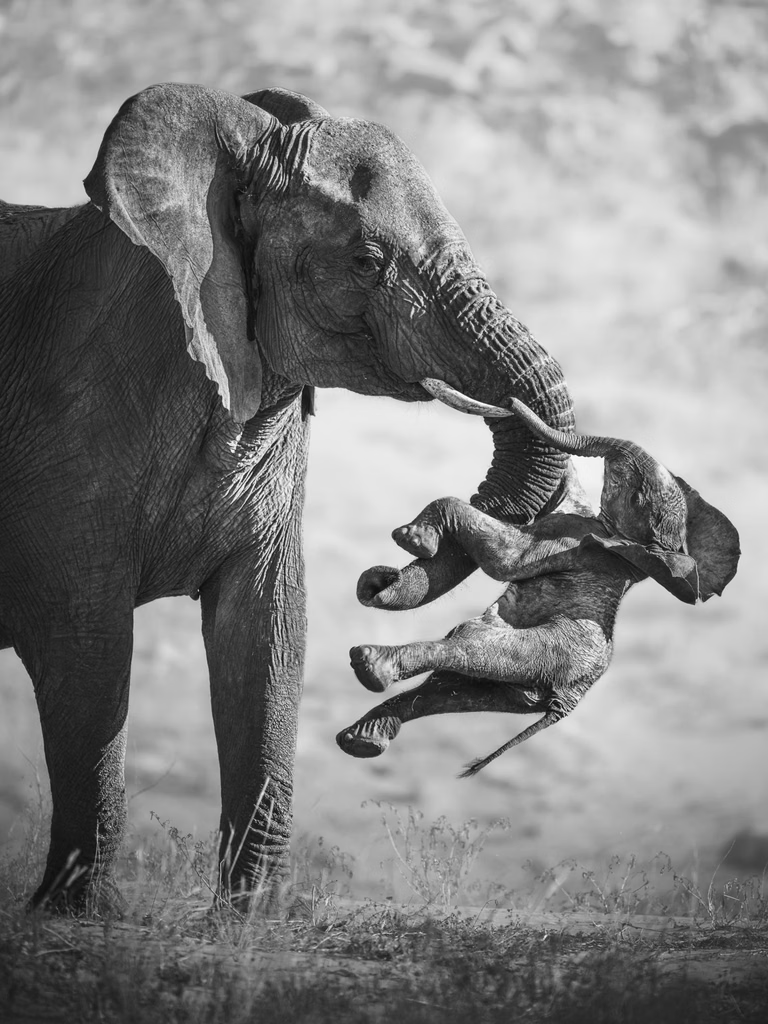
The black-and-white image, titled The Aftermath, captures a mother elephant carrying her dead calf across a dry riverbed in Namibia, offering a poignant glimpse into the emotional lives of wild animals.
An Italian wildlife photographer has captured one of the most moving images of the natural world, winning the prestigious Wildlife Photographer of the Year 2026 competition with a photograph that explores the bonds between a mother and her offspring — and the profound experience of loss.
Federico Veronesi, a Milan-born photographer who has spent much of his life documenting Africa’s wildlife, won over the judges with The Aftermath, a striking black-and-white photograph taken in Namibia’s Huab River valley. The image depicts an adult female elephant carefully carrying the lifeless body of her calf, holding it gently between her trunk and tusks as she crosses the dry riverbed.
Organised by London’s Natural History Museum, the Wildlife Photographer of the Year competition is one of the world’s most renowned celebrations of nature photography. Veronesi’s winning image stands out for its emotional intensity, inviting viewers to reflect on the complexity of animal behaviour and the possibility of grief beyond the human experience.
A haunting encounter in the Namibian wilderness
The photograph emerged from an unexpected encounter in the African wilderness. While following a herd of elephants, Veronesi noticed unusual drag marks etched into the sand. Curious about their origin, he followed the tracks until he came upon a scene that would leave a lasting impression.
There, he found a mother elephant carrying her dead calf with remarkable tenderness. The animal’s posture and the delicate way she held the young elephant transformed an observation of wildlife into an intimate and deeply affecting moment.
Rendered in black and white, The Aftermath strips the scene of colour and distraction, drawing attention to the textures of the landscape and the physical connection between mother and calf. The result is an image that conveys both the harsh realities of life in the wild and the powerful bonds that can exist between animals.
Rather than simply documenting an unusual behaviour, Veronesi’s photograph raises profound questions about attachment, loss and the emotional lives of elephants — animals known for their complex social structures and strong family relationships.
A life devoted to Africa’s wildlife
Veronesi’s achievement is the culmination of a lifelong commitment to the natural world. Raised in Milan in a family of nature enthusiasts and photographers, he developed a passion for wildlife and the African landscape from an early age.
After completing his university studies, he moved to Kenya in 2002, turning his interest in photography and animals into a professional career. Since then, he has worked as both a photographer and a safari guide, gaining first-hand experience of the ecosystems and wildlife he documents.
Elephants have become a central subject of his work. His photographic book Walk the Earth, the result of a five-year project, chronicles the lives of Africa’s remaining great elephants, offering an intimate portrait of these remarkable animals and the challenges they face.
His long-standing relationship with the African wilderness has helped shape a photographic style that combines technical skill with patience, observation and a deep understanding of animal behaviour.
More than a photograph
With The Aftermath, Veronesi has created an image that reaches beyond the boundaries of wildlife photography. The photograph offers a rare and unsettling perspective on a moment of apparent mourning, challenging viewers to reconsider the emotional distance they may place between humans and other species.
Although the precise nature of an animal’s experience of grief remains a complex scientific question, elephants display behaviours that researchers have associated with responses to death, including lingering near deceased companions and touching their bodies.
Veronesi’s image does not attempt to provide definitive answers. Instead, it captures a moment that encourages reflection on the bonds between living creatures and the mysteries of animal consciousness.
In a world where wildlife faces mounting environmental pressures, The Aftermath also serves as a reminder that elephants are more than symbols of Africa’s wilderness. They are sentient, socially complex animals whose lives unfold through relationships, experiences and behaviours that humans are only beginning to understand.
For Veronesi, the photograph represents the power of patient observation and the ability of a single image to communicate something universal. For its viewers, it is an invitation to look more closely at the natural world — and to recognise that the stories it holds can be as moving as they are difficult to comprehend.