From Pais to Marseille, protests against the French government’s policies are growing. Students denounce staff shortages, deteriorating school buildings and reduced funding for public education. Meanwhile, the Yellow Vests announce new demonstrations for next Saturday.
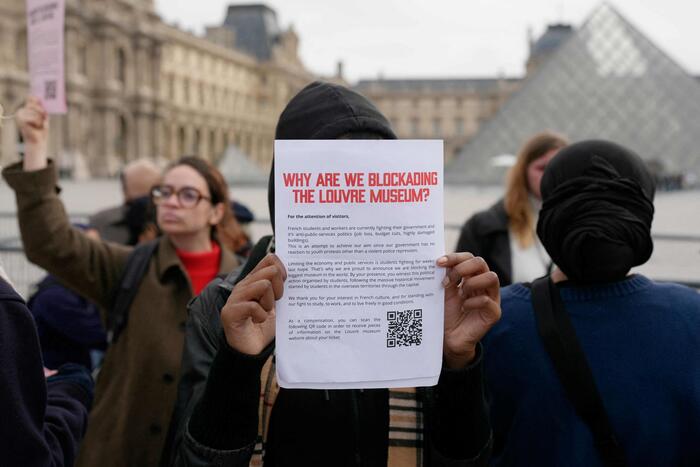
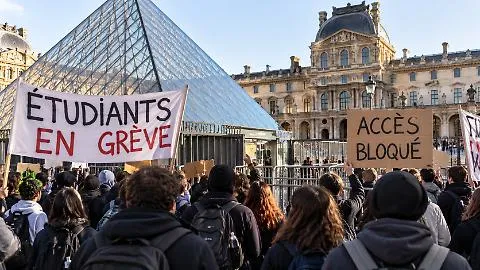
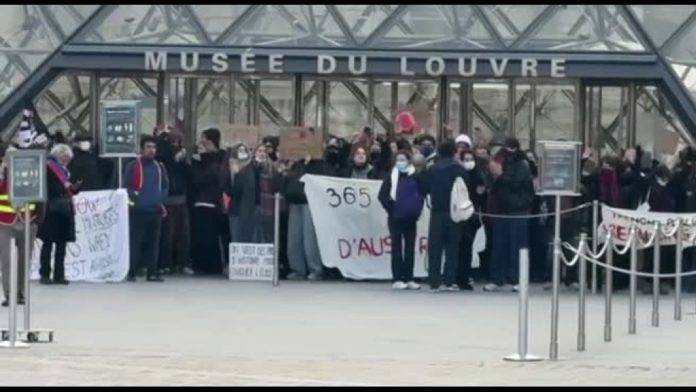
PARIS – On Monday morning, access to the Louvre Museum was blocked by a group of students mobilising to express solidarity with the high school student movement and denounce police repression. The news was reported by the Agence France-Presse (AFP). The protest, which attracted the attention of visitors and tourists waiting outside the entrance to the famous Parisian museum, is part of a climate of growing social tension in France.
“We are proud to announce that we are blocking the largest museum in the world,” reads a leaflet posted near the Louvre. The initiative was organised by students from the École du Louvre, an art school with no direct connection to the museum. The Louvre’s management clarified that the museum was simply being used by the demonstrators as a “platform” to raise awareness of their demands.
The Reasons Behind the Protest
At the heart of the mobilisation are cuts to education and cultural funding, along with the difficult conditions facing France’s public school system. Students denounce the shortage of teachers and school staff, overcrowded classrooms, deteriorating buildings and the growing difficulties that undermine the right to a proper education.
To explain their reasons for protesting to tourists, the demonstrators distributed leaflets outlining their demands. “French students and workers are fighting against their government and its policies hostile to public services,” the leaflet states, referring to job losses, budget cuts and the poor condition of public facilities.
The students aim to draw the attention of public opinion and institutions to the need for greater investment in public services, particularly education and culture.
Protests Spread to Dozens of Cities
The mobilisation is not limited to the capital. Student protests have spread to dozens of French cities, involving a growing number of young people and gaining support from other groups of workers.
The movement has also been joined by teachers’ unions, which have long denounced the lack of resources allocated to public education. Their demands focus primarily on new recruitment, adequate school facilities and sufficient funding to ensure decent learning conditions.
Over the weekend, demonstrations took place across the country, bringing together students, former members of the Yellow Vests movement, trade unions, farmers and activists. This convergence of different groups highlights the growing discontent with government policies.
Tensions in Marseille and New Initiatives by the Yellow Vests
The climate of protest is also reflected in the measures adopted by the authorities. In Marseille, a ban on demonstrations was imposed between noon and 8 p.m., while Sébastien Lecornu ordered the implementation of curfew measures, according to reports concerning the mobilisation.
Meanwhile, the Yellow Vests have announced a new demonstration for next Saturday, describing it as “Act Two” and signalling a possible further escalation of the protests.
The movement, which began with students’ demands and concerns about the state of public education, is now part of a broader wave of social unrest. Calls for greater investment in public services are intertwined with accusations of repression against demonstrators and growing dissatisfaction among various sections of the population.
In this context, the blockade of the Louvre represents a symbolic gesture: bringing the protest to one of the world’s most renowned cultural landmarks to draw attention to problems that, according to the demonstrators, affect French society as a whole.
The coming days will be crucial in determining whether the protests can maintain their momentum and how the government will respond to the demands put forward by students, teachers and workers.