
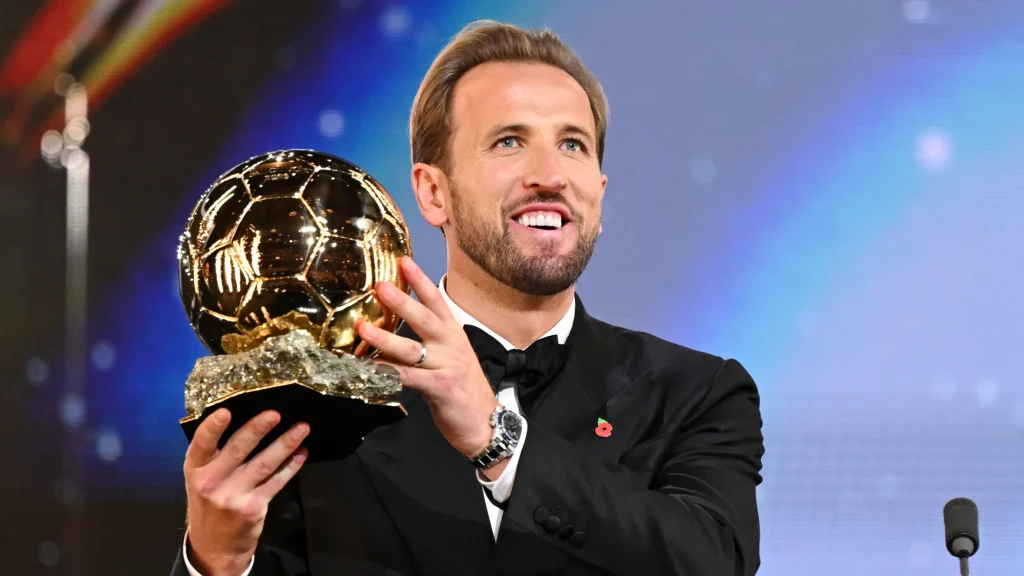
The Bayern Munich forward has enjoyed the finest season of his career, scoring 61 goals for his club and 12 for England, while helping Bayern to the Bundesliga title and his country to a World Cup semi-final.
Prolific goalscorer. Quiet gentleman. Reluctant celebrity.
Harry Kane’s Ballon d’Or triumph recognises not only one of the most prolific strikers of the past decade, but also a footballer who refuses to conform to the stereotypes of the modern game.
In a country dominated by tabloid headlines and celebrity gossip, Kane has rarely provided the kind of controversy that sells newspapers. If anything, his critics have accused him of being a little dull, even unremarkable away from the pitch. He does not get drunk, he has no tattoos to speak of, and he has never built a reputation around scandalous affairs. His interests are modest, with golf among his few notable hobbies — a sport Oscar Wilde once described as “a good walk spoiled”.
Yet Kane’s Ballon d’Or victory is ultimately about football. The England captain becomes the fifth Englishman to win the prestigious award, following in the footsteps of Michael Owen, who claimed it in 2001.
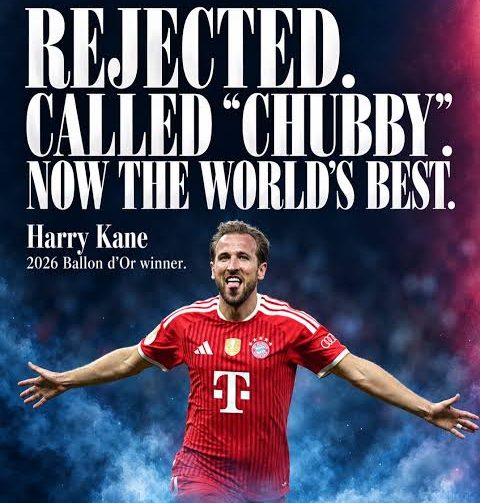
The 2025–26 campaign has been the finest of Kane’s career. Born in Walthamstow, east London, on 28 July 1993, he joined the Ridgeway Rovers youth set-up at the age of six before moving to Arsenal’s academy two years later. His time there was short-lived, however, with the young striker reportedly released for being “a little chubby”.
Few could have imagined what would follow.
Kane went on to score 61 goals for Bayern Munich and another 12 for England during a remarkable season that combined individual brilliance with collective success. Bayern lifted the Bundesliga title, while England reached the World Cup semi-finals, with their captain once again at the heart of the national team’s ambitions.
His momentum has continued into the current campaign, with ten goals in 12 appearances, taking his Bayern tally to 156 goals in 159 matches.
Across his professional career, Kane has now scored 543 times: 452 goals at club level and 91 for England, making him his country’s all-time leading international goalscorer. His club record includes 280 goals for Tottenham Hotspur, 16 during loan spells at Leyton Orient, Millwall, Norwich City and Leicester City, and 156 for Bayern.
But reducing Kane to a mere penalty-box predator would overlook what makes him such a complete forward. His vision, passing range and ability to bring teammates into play are as impressive as his finishing. Equally comfortable creating chances as he is converting them, he represents the modern striker in its most complete form: intelligent, versatile and technically gifted, with a particular talent for spectacular acrobatic finishes.
From rejected youngster to football’s greatest stage
Kane grew up idolising David Beckham and joined Tottenham Hotspur in 2009. After a succession of loan spells, his breakthrough in the first team finally arrived in 2013.
His first Premier League goal came on 2 November 2014 against Aston Villa. It was the beginning of a remarkable scoring journey that would eventually bring him 213 goals in the competition.
Behind the goals, however, lies a relentless commitment to his profession. Kane does not drink alcohol, follows a carefully managed diet prepared with the help of a private chef, and is known for arriving first at the training ground and leaving last.
His ambition has always been straightforward: to make the most of his ability and finish his career without regrets.
“I want to finish my career with no regrets,” Kane has said. “I never want to look back and think I should have followed the rules more closely to become a better player.”
It is a philosophy that has shaped both his career and his public image. While other stars have built brands around flamboyance and spectacle, Kane has preferred discipline, consistency and quiet determination.
A family affair
Kane’s career has always been closely connected to his family. His older brother, Charlie, acts as his agent, while his father, Patrick, oversees the financial side of his affairs.
The arrangement reflects the values instilled in him from an early age. Both of his parents were born in Galway, on Ireland’s west coast, and family has remained a constant throughout his rise to the top of world football.
Charlie, in particular, was a childhood hero to his younger brother. Entrusting him with the management of his career was therefore a natural decision.
In an essay for The Players’ Tribune, Kane recalled spending countless hours playing football with his father and brother in a park behind their home.
“There were no goals. No proper pitch,” he wrote. “All we needed was a bit of grass and two trees, and we were happy.”
He credited Charlie with challenging him in one-on-one battles for thousands of hours, giving him the chance to pretend to be one of his own idols, Teddy Sheringham. His father, meanwhile, helped him recover from the disappointment of being released by Arsenal.
Those early experiences helped shape the resilience that would eventually carry him to the summit of European football.
Finding success in Munich
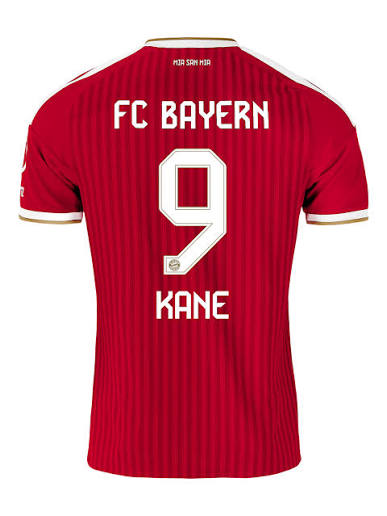
Since moving to Munich in 2023, Kane has addressed one of the biggest omissions from an otherwise extraordinary career: major team honours.
During his years in English football, he scored goals at an astonishing rate but failed to win a major trophy with Tottenham. Individual awards and scoring records could not entirely compensate for the absence of silverware.
Germany has changed that.
His time at Bayern has brought domestic success, including Bundesliga honours, and given him a new platform on which to pursue his greatest ambitions. The Champions League remains a major target, as does the prospect of leading England to glory at Euro 2028.
Off the pitch, Kane appears equally settled. He has embraced life in Bavaria, even attending Oktoberfest in traditional Bavarian dress, and says the city has proved an excellent place to raise his family.
“It’s different from London, but the people in Munich have been incredibly welcoming,” he said. “There’s plenty of space to enjoy the outdoors, which is fantastic for my family. It has been a positive decision. We’re really happy here.”
For a player whose reputation has been built on consistency rather than controversy, the move has proved transformative. Munich has given Kane the team success that eluded him for so long in England, while allowing him to continue doing what he does best: scoring goals.
More than a goalscorer
Kane’s Ballon d’Or victory is a fitting reward for a career defined by persistence, professionalism and an almost obsessive dedication to improvement.
Yet his influence extends beyond the numbers. In an era when footballers are scrutinised as much for their private lives as for their performances, Kane has maintained a remarkably understated public profile. He has also used his platform to speak out against discrimination, demonstrating that a player need not be the loudest voice in the room to stand up for important principles.
He may not be the most flamboyant figure in world football, but his achievements have made him impossible to ignore.
The goals, the records and the trophies tell one story. His conduct, commitment and willingness to challenge discrimination tell another.
Together, they explain why Harry Kane is now the holder of football’s most coveted individual prize.
At home in Munich, there is a new trophy to admire — one that represents far more than a remarkable season. For Kane, the Ballon d’Or is the culmination of years of hard work, setbacks and unwavering belief.
The quiet man of English football has reached the very top. And he has done it his own way.