
The destruction of a bookshop is not an act of protest, but an attack on culture, freedom of thought, and a space that belongs to everyone. Defending books means defending democracy and the right to imagine a better future.
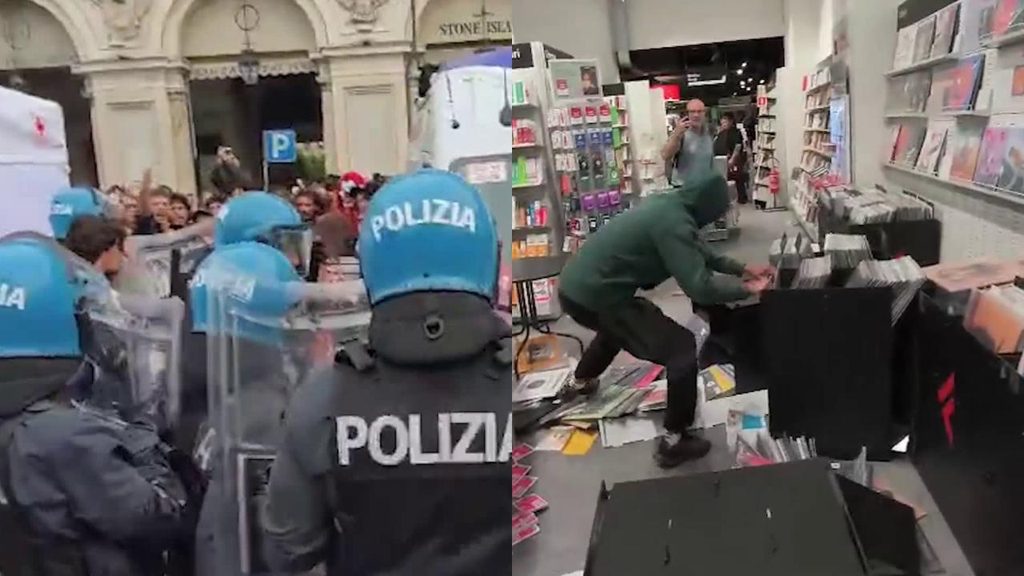
Attacking a bookshop means wounding the heart of an entire community. It is not simply a matter of overturned shelves, damaged windows, and books scattered across the floor. It is an assault on our right to think, dream, learn, and be free. The images that have circulated in recent days are deeply distressing and difficult to accept for anyone who recognises reading as an essential tool for individual and collective growth.
Books are not merely objects. They are sources of knowledge, opportunities for discussion, and windows onto the world. They teach us to reflect, listen, understand different perspectives, and develop critical thinking. For this reason, destroying a bookshop cannot be considered a legitimate form of protest. It means attacking one of the places where awareness, freedom, and democratic participation are nurtured.
Violence Is Never the Answer
Entering a bookshop, destroying everything inside, and throwing books onto the floor is not a protest against the rising cost of living, nor is it a solution to the economic difficulties faced by so many people every day. It is an uncivilised act that damages the very things that should be accessible to everyone: culture, history, knowledge, and the ability to understand the world and, if necessary, change it.
Social anger, particularly when it stems from hardship, insecurity, and inequality, deserves to be heard and addressed through concrete solutions. However, destruction does not solve injustice or help build a fairer society. On the contrary, it risks weakening the very spaces that help people understand the causes of social problems and imagine possible alternatives.
Books are not a luxury to be discarded when times are hard. They are tools that help us recognise injustice, question those in power, and search for new ways forward. If, in an attempt to condemn an exclusionary system, we destroy a place that promotes awareness and understanding, then we must stop and reflect on how far we have strayed from the true meaning of protest.
Bookshops: Spaces of Freedom and Community
Behind every book, there are people, skills, hard work, and financial investments. There are authors, publishers, printers, distributors, booksellers, and readers: a complex and fragile industry struggling to survive in a world where culture is too often considered unnecessary, expendable, or reserved for those who can afford it.
A bookshop, however, is much more than a commercial business. It is a meeting place, a space for dialogue, and a cultural centre. It is where a young person can discover a story that changes their life, where someone can find the words to understand their own experiences, and where a community can come together, exchange ideas, and grow.
Destroying these places also harms the people who keep them alive every day, often through considerable effort and with limited resources. It weakens the social fabric and deprives neighbourhoods of spaces that encourage participation, learning, and collective enrichment.
Do Not Confuse Violence with the Voices of Young People
These incidents are even more painful because they risk casting an unfair shadow over the efforts of the many young people who take to the streets peacefully to demand a better future. Young men and women are standing up for their rights, speaking out against inequality, and asking for greater attention to the challenges faced by younger generations.
Young people are often among those who frequent bookshops, attend cultural events, and recognise knowledge as a means of empowerment. It is therefore essential to draw a clear distinction between peaceful protest and acts of vandalism. Peaceful demonstrations can be a valuable resource for democracy, while acts of destruction contradict its fundamental principles.
No cause, however important, can justify the destruction of places dedicated to sharing knowledge. The freedom to express disagreement must go hand in hand with respect for people, their work, and the places that serve the common good.
Culture Is Not the Enemy
In a society marked by economic hardship and social tensions, culture should never be regarded as a privilege reserved for a few. On the contrary, it should be recognised as an essential resource for understanding how we have reached our current situation and identifying ways to bring about meaningful change.
Culture alone cannot pay the bills or immediately eliminate inequality, but it provides the tools to understand, expose, and challenge these problems. It cannot replace the political and economic measures that are urgently needed, but it helps develop informed citizens who can participate in public life and imagine alternative solutions.
Faced with scenes of destruction like those witnessed in recent days, outrage is inevitable. Yet indignation alone is not enough. We must reaffirm the value of cultural spaces, support those who keep them alive, and make it clear that knowledge must never become a target.
Bookshops are bridges, not enemies. They are places to protect, not destroy. And if we truly want a fairer society, we must begin by respecting the things that enable people to understand the world and imagine a better one.
Because when books are destroyed, it is not just pages that are lost. We also damage the opportunities for knowledge, freedom, and a better future for an entire community. Such scenes must never leave us indifferent.