From the rising cost of living to the education crisis, from unemployment to austerity policies, four European countries are gripped by demonstrations that have brought thousands of people onto the streets.
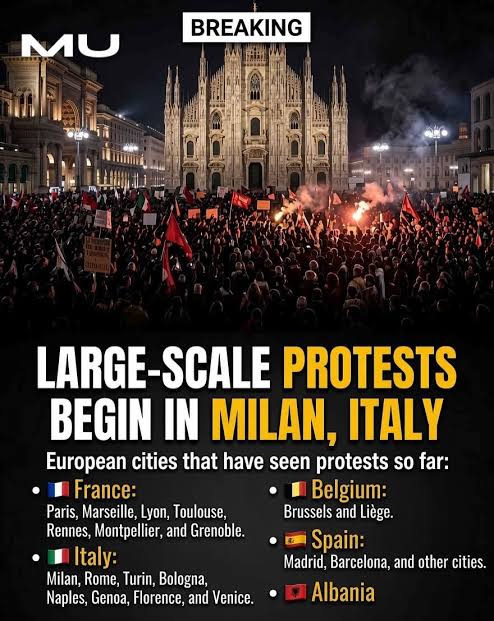
Europe is once again grappling with public anger spilling into the streets. From Milan to Paris, from Tirana to Brussels, the protests of recent days have drawn a map of discontent that cuts across national borders, political systems and differing economic conditions.
There is no single driving force behind the unrest, nor is there a continent-wide organised movement. Rather, a convergence of demands is taking shape around the cost of living, access to education, job insecurity and growing distrust of institutions. Youth discontent has emerged as a key catalyst, gradually converging in several countries with the grievances of workers, trade unions and other social groups.
Clashes in Milan
The protests have also reached Milan, where a demonstration on Saturday against rising prices, inflation and cuts to public services descended into violent clashes in the Piazza Duomo area. The rally initially drew hundreds of people, mobilised in part through an appeal circulated on social media.
Later, a group of masked individuals, separate from the student organisers, allegedly sparked the violence by setting off smoke bombs and firecrackers and damaging public property.
Violence continued in the following hours. By yesterday evening, the number of people detained had risen to more than 200, around 80 per cent of them minors.
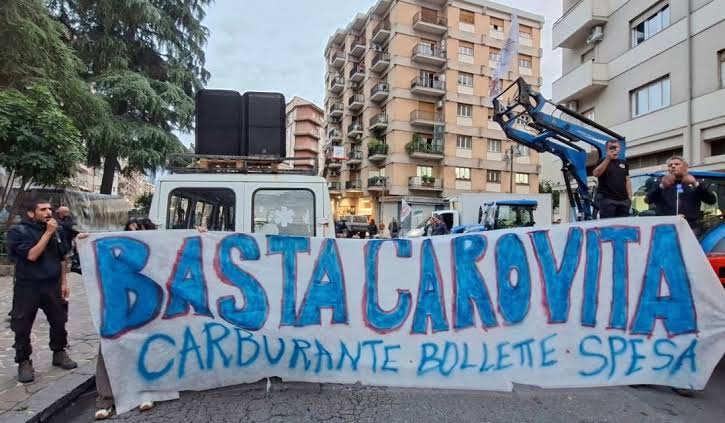
France: Student Unrest Escalates into a National Crisis
France has emerged as the epicentre of this new wave of protests. For weeks, secondary school students have been denouncing staff shortages, inadequate funding for education and the deteriorating condition of school facilities. What began as a movement protesting teaching conditions has gradually evolved into a much broader mobilisation.
On Saturday, mass demonstrations swept across the country, drawing between 550,000 and 800,000 people, according to estimates reported by the Associated Press. Students were not the only ones taking to the streets: workers, trade unions and citizens frustrated by economic hardship also joined the protests.
In Paris, the situation quickly deteriorated. Fires, looting and damage to public buildings were reported from Lyon to Marseille and as far as Limoges. Particularly serious damage was reported in Limoges, where the historic town hall was heavily damaged by fire.
The nationwide arrest tally exceeded 2,000, while 855 people were detained in Paris, according to figures released by the authorities.
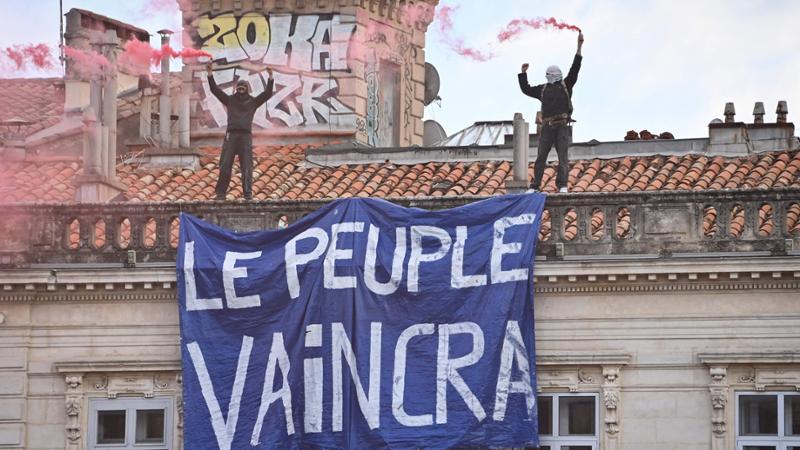
Albania: The Generation Challenging Edi Rama Sets Tirana Ablaze
In Albania, the protests have taken on the character of a direct challenge to political power. Thousands of young people have taken to the streets of Tirana to demand the resignation of Prime Minister Edi Rama.
Corruption, unemployment, the state of the university system and the lack of prospects for younger generations lie at the heart of the mobilisation.
Initially led by students, the movement has gradually expanded its reach, spreading to other cities. On Saturday, the fifth consecutive day of demonstrations, thousands gathered outside the Ministry of Education in the capital.
The situation escalated when some masked protesters threw stones at riot police, who responded with tear gas, stun grenades and water cannons.
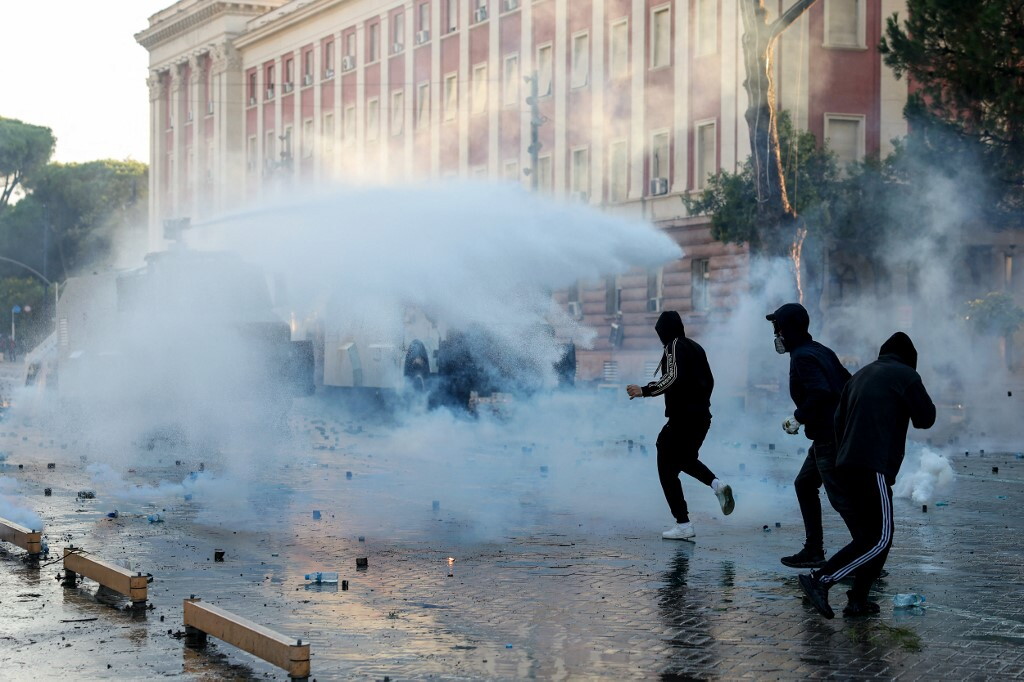
Belgium: Students and Trade Unions Unite Against Austerity as Protests Paralyse Brussels
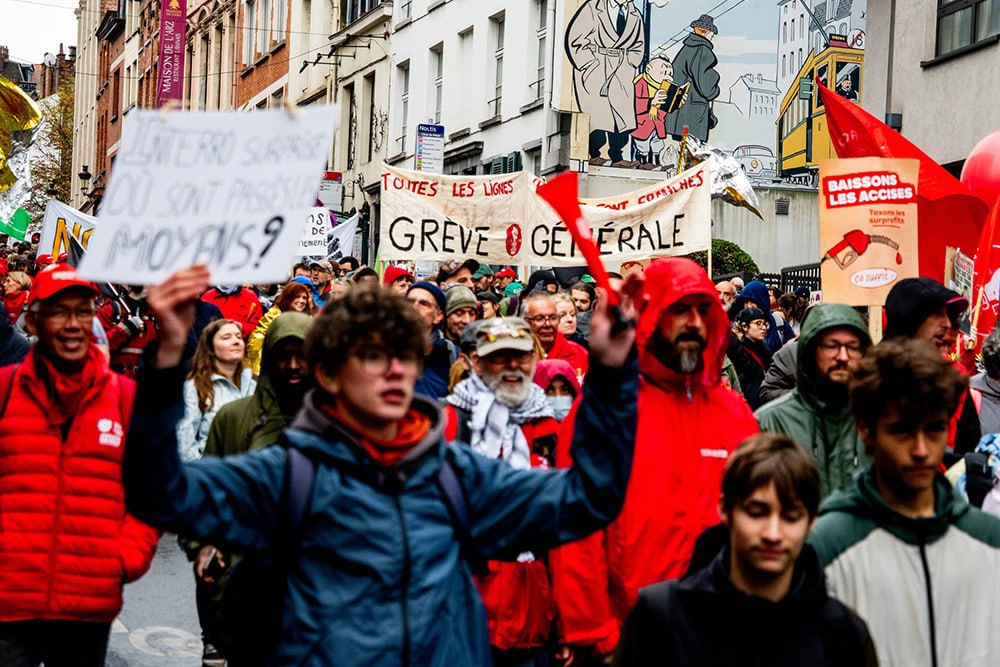
In Belgium, the mobilisation has centred on opposition to austerity measures and government-backed reforms. Unlike in Albania, where calls for the prime minister’s resignation are among the movement’s main demands, the Belgian protests have brought student grievances and trade union opposition together around a common cause.
Brussels has become the main focal point of the unrest, with students taking part in a nationwide strike against government measures. Demonstrations have been marked by mounting tensions, with makeshift barricades, overturned rubbish bins and objects set on fire along the streets of the capital.