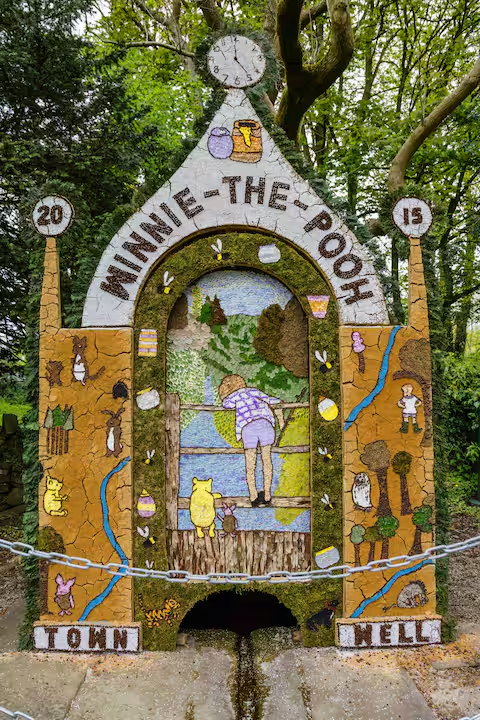
A century after his literary debut, the honey-loving bear continues to charm generations of readers. Created by A. A. Milne as a bedtime companion for his son, Winnie-the-Pooh has become a global cultural icon whose enduring appeal lies in friendship, kindness and the simple pleasures of life.
On 14 October, one of the most cherished characters in children’s literature celebrates his 100th anniversary. With his red shirt, insatiable appetite for honey and gentle adventures in the Hundred Acre Wood, Winnie-the-Pooh has spent a century winning hearts around the world.
Yet behind the familiar image of the round-bellied bear lies a story rooted in family life, imagination and the enduring power of childhood. What began as a father’s way of entertaining his young son at bedtime grew into a literary phenomenon, captivating generations of children while continuing to offer comfort and wisdom to adults.
A hundred years after the publication of the book that introduced him to the world, Pooh remains as relevant as ever. His philosophy is disarmingly simple: life does not always require answers or grand ambitions. Sometimes, all that matters is being there for the people you love.
From a childhood toy to a literary legend
Before becoming one of the most recognisable bears in the world, Winnie-the-Pooh was simply a stuffed toy belonging to Christopher Robin Milne, the son of English author Alan Alexander Milne.
Milne had a habit of inventing stories for his son as part of their bedtime routine. Rather than relying on traditional fairy tales, he preferred to create original adventures featuring the toys Christopher treasured most. Among them was the little bear who would eventually become a household name.
First introduced to readers in Winnie-the-Pooh, published on 14 October 1926, the character quickly established himself as something special. With his round tummy, his love of honey and his extraordinary ability to get lost in his own thoughts, Pooh embodied a gentle, unhurried approach to life.
He lives in a tree, wears a red shirt and approaches each day without much of a plan. For Pooh, happiness is often found in the smallest things: a walk through the woods, a conversation with a friend or the simple pleasure of having nothing in particular to do.
It is precisely this uncomplicated outlook that has helped him endure. In a world increasingly defined by speed, pressure and constant demands, Pooh offers a reminder that there is value in slowing down and appreciating the moment.
A cast of unforgettable friends
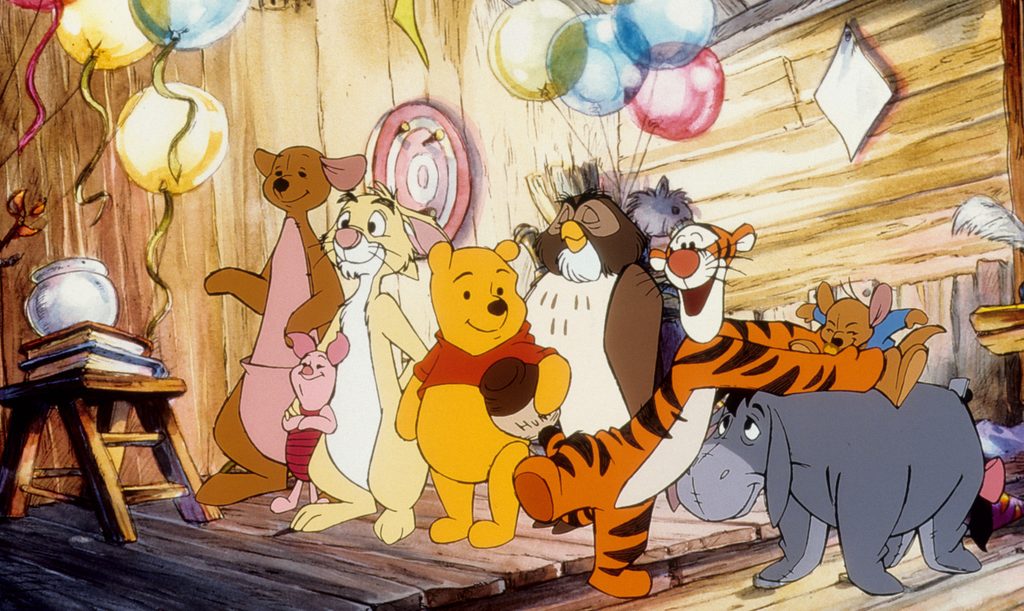
Pooh’s magic would be incomplete without the colourful community that surrounds him. The Hundred Acre Wood is home to a cast of characters whose distinctive personalities reflect different aspects of human nature.
There is Piglet, the small, pink and timid companion whose courage often emerges when he least expects it. Eeyore, the perpetually gloomy donkey, views the world with a weary resignation that has made him an unlikely favourite among readers. Tigger, meanwhile, is a boundless source of energy, always ready to bounce into the next adventure.
Rabbit is devoted to order and rules, while Owl prides himself on his supposed wisdom. Kanga and her young son, Roo, bring warmth to the group, while Christopher Robin serves as the human heart of this imaginary world, drawing his friends together through play and imagination.
Their adventures are rarely about great battles or extraordinary achievements. Instead, they revolve around everyday misunderstandings, small discoveries and the challenges of friendship. Through these seemingly modest encounters, Milne explored themes of loyalty, insecurity, generosity and belonging.
The result is a fictional world that feels remarkably familiar, where differences are accepted and companionship matters more than perfection.
The real landscape behind the Hundred Acre Wood
The setting for Pooh’s adventures was inspired by the countryside surrounding Cotchford Farm, the family home purchased by the Milnes in East Sussex. Its woods and rural landscapes provided the inspiration for a fictional refuge that would eventually become one of the most recognisable places in children’s literature.
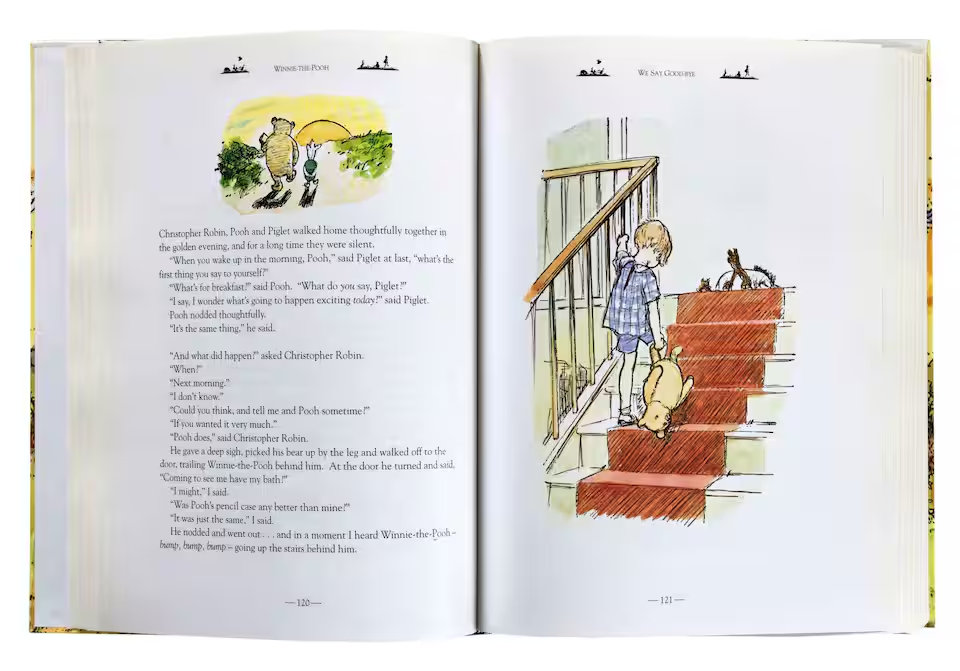
A crucial role in bringing this world to life belonged to illustrator Ernest H. Shepard. His delicate pen-and-ink drawings helped establish the visual identity of Pooh and his companions long before they appeared on screen.
To make his illustrations feel authentic, Shepard observed Christopher Robin playing with his toys and studied the natural surroundings that inspired the Hundred Acre Wood. His drawings captured the charm and intimacy of childhood play, giving the characters a distinctive personality that generations of readers would come to recognise.
The illustrations became inseparable from the stories themselves, helping transform Milne’s creations into enduring cultural icons.