
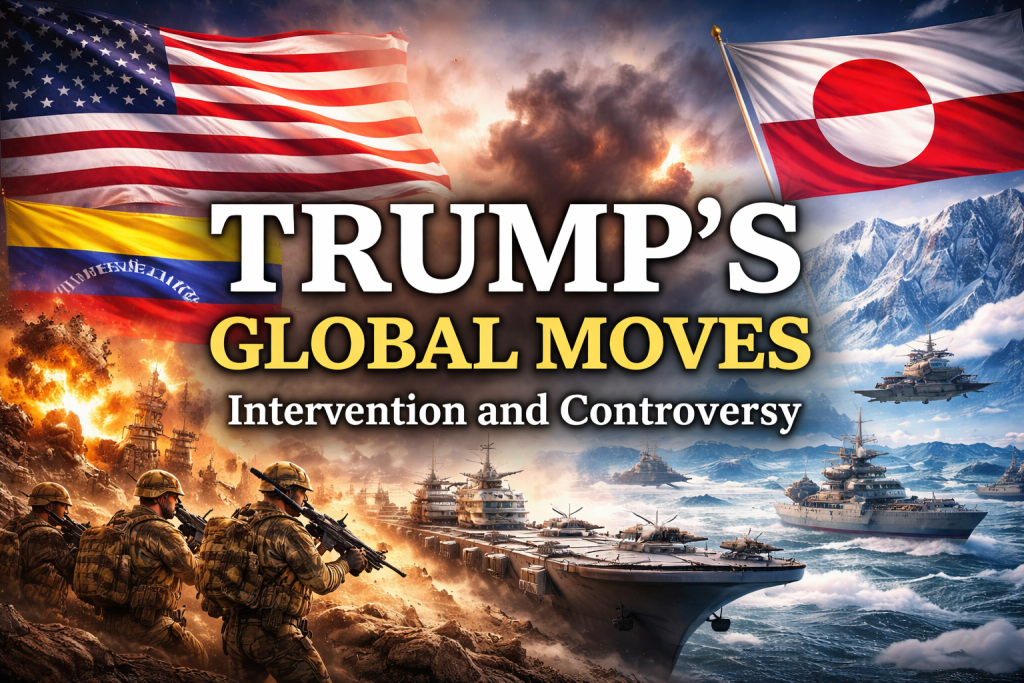
In January 2026, former U.S. President Donald Trump ordered a military intervention in Venezuela. According to the U.S. government, the operation aimed to stop illegal activities, fight drug trafficking, and bring political change to the country. Trump described the action as necessary to protect U.S. interests and promote stability.
However, the intervention was strongly criticized by many countries. Several governments in Latin America said the action violated Venezuela’s sovereignty and could increase regional instability. China and Russia also condemned the intervention, calling it a breach of international law and the United Nations Charter.
At the same time, international attention has returned to Trump’s interest in Greenland. Trump has repeatedly stated that the island is strategically important for U.S. security, natural resources, and influence in the Arctic region. While he has not announced concrete actions, his statements have raised concerns among European leaders, especially Denmark, which has rejected any idea of U.S. control over Greenland.
European countries have generally reacted with caution to both issues. Many leaders stress the importance of diplomacy, cooperation, and respect for international rules rather than unilateral actions. At the United Nations, Trump’s foreign policy approach has been widely debated, with supporters highlighting national security goals and critics warning about long-term global consequences.
Overall, Trump’s recent actions and statements suggest a foreign policy focused on strategic interests and strong leadership, but they have also increased tensions and divided international opinion. These events show how decisions by powerful countries can have global effects and spark worldwide debat