

In the sun-kissed land of Sicily, there’s a sweet treat that’s as rich in history as it is in flavor: granita. But where did this icy delight come from, and how did it become a beloved part of Sicilian cuisine?
The tale begins centuries ago, during the Arab rule of Sicily. The Arabs brought with them the recipe for sherbet, a refreshing drink made with fruit juices or rose water. The nobles of Messina took it a step further, using the snow collected in winter from the island’s majestic mountains as the key ingredient. They stored this precious snow in special caves, ready to be transformed into a cooling dessert when summer arrived.
Around the 1500s, a culinary innovation changed the game. Instead of using snow as an ingredient, Sicilians discovered that mixing it with sea salt could create a powerful cooling effect. This led to the invention of the “pozzetto,” a wooden tub with a zinc bucket inside. By rotating the tub with a simple crank, the mixture of snow and salt could freeze whatever was placed inside it, giving birth to Sicilian granita as we know it today.
But granita didn’t stop evolving there. Over the centuries, it absorbed influences from various cultures, resulting in a wide array of flavors. While classics like lemon and almond remain popular, adventurous palates can now enjoy exotic options like prickly pear and mulberry, or even savory combinations like tomato and basil.
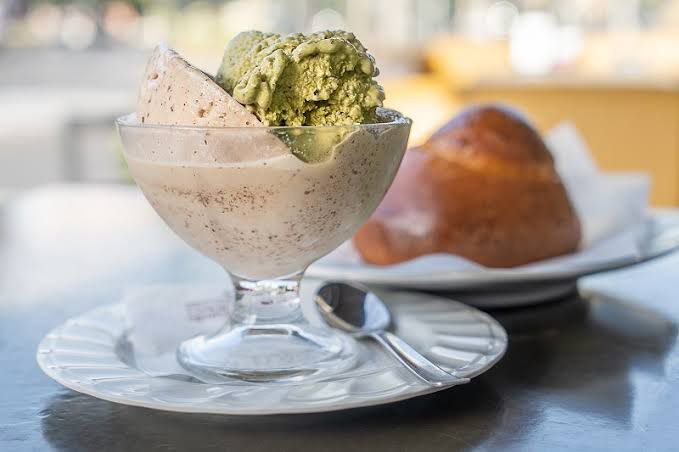
Serving granita is an art in itself. It’s often paired with a fluffy brioche bun, creating a delightful contrast between the cold, velvety granita and the warm, buttery bread.
And Sicilian granita isn’t just confined to its homeland. Thanks to Sicilian immigrants, its legacy has spread far and wide, with cafes and gelaterias around the world offering their own take on this iconic dessert.
So the next time you find yourself in Sicily, be sure to indulge in a refreshing granita. It’s not just a frozen treat – it’s a taste of history, culture, and the ingenuity of generations past.