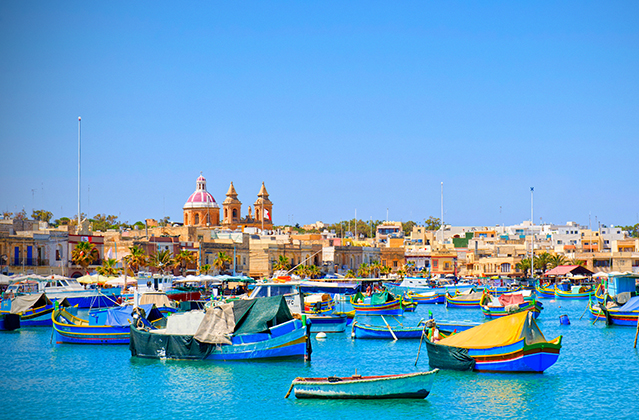
Marsaxlokk is a quaint, traditional fishing village in the island nation of Malta. The difficult to pronounce name is derived from the Arabic word “Marsa“, which means port, and the Maltese word “xlokk“, which means south-east. The fact that the name of the village is a syncretization of two distinct languages — one from the Middle East and one from the Mediterranean — is indicative of its unique history and diversity of influences. As one can guess, the village is located on the southeastern coast of Malta. The town has a modest population of around 3,000 people and has been used as a port for thousands of years. Marsaxlokk is popular among domestic Maltese visitors as well as tourists. The main points of attraction are its history, culture, and scenery.
The History Of Marsaxlokk
Tas-Silġ And The Bronze Age
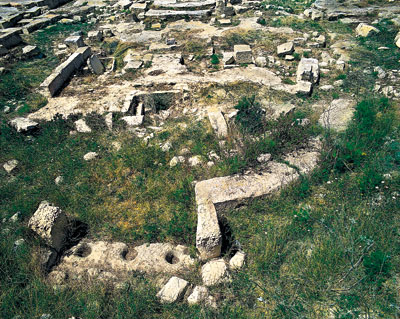
Perhaps the earliest remnant of antiquity that can be found in Marsaxlokk is Tas-Silġ.
The Tas-Silġ site is made up of temples and megalithic structures. The megalithic temple complex dates back at least as far back as the 3rd millennium B.C. Ancient Phoenicians and Punics used the island temples to worship the Hellenic Egyptian Goddess Astarte, who represented war, sexuality, royal power, and healing.
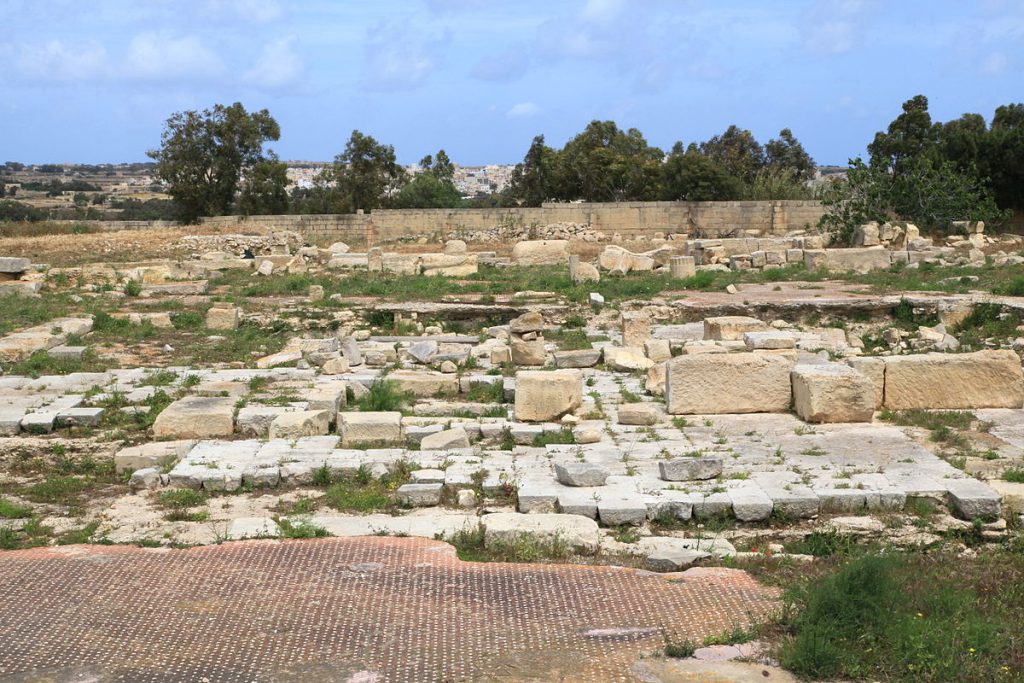
The spiritual importance of the site was recognized by the successors of the Phoenicians. During the Roman Era, Tas-Silġ was used as a temple to the deity Juno, who was the daughter of Saturn, or Chronos.
The Roman statesmen Cicero made reference to the temple of Juno in his recorded speeches. Today, the port city of Marsaxlokk is also known as Portus Herculis, which is a reference to the town’s ancient connection with Rome. More recent archeologic analysis shows that the temple site was used as a place of exchange for international trade.
The sanctity of the temple was conducive to international trade at a time when the government did not have a monopoly on violence to enforce transactions and property rights. As trade at the time was occurring between religiously similar Pagan empires, the rules of fair exchange would have been respected at the temples, even if they were not respected elsewhere. The artifacts found at this temple included highly valuable ivory ornaments and statues.
Visitors can experience this spiritual hub firsthand at Tas-Silġ, which is on a rounded hilltop near the border of the city of Żejtun.
What To Do In Marsaxlokk
Apart from visiting historical sites such as Tas-Silġ, walking around to see the ancient architecture, and taking a tour of military fortifications, the best way to experience Marsaxlokk is to do simple, everyday things.
About 70% of the Maltese fishing fleet is located in Marsaxlokk. The fishermen use traditional boats called luzzu and kajjik. Swordfish, tuna, and lampuki (mahi-mahi) are caught off the coast of Marsaxlokk, and on Sundays, the fishermen sell their catches directly to customers on the quay.
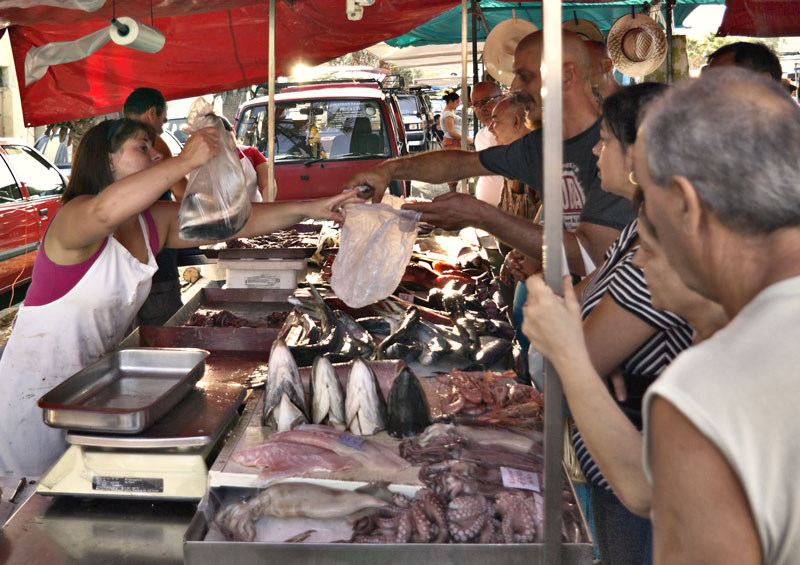
Tourists will find that Sundays are a wonderful time to be in Marsaxlokk, when the residents are dressed up for Church and the boardwalk is rich with the smell of fresh fish. If tourists are planning on staying for less than a week, it’s best to come on a weekend.
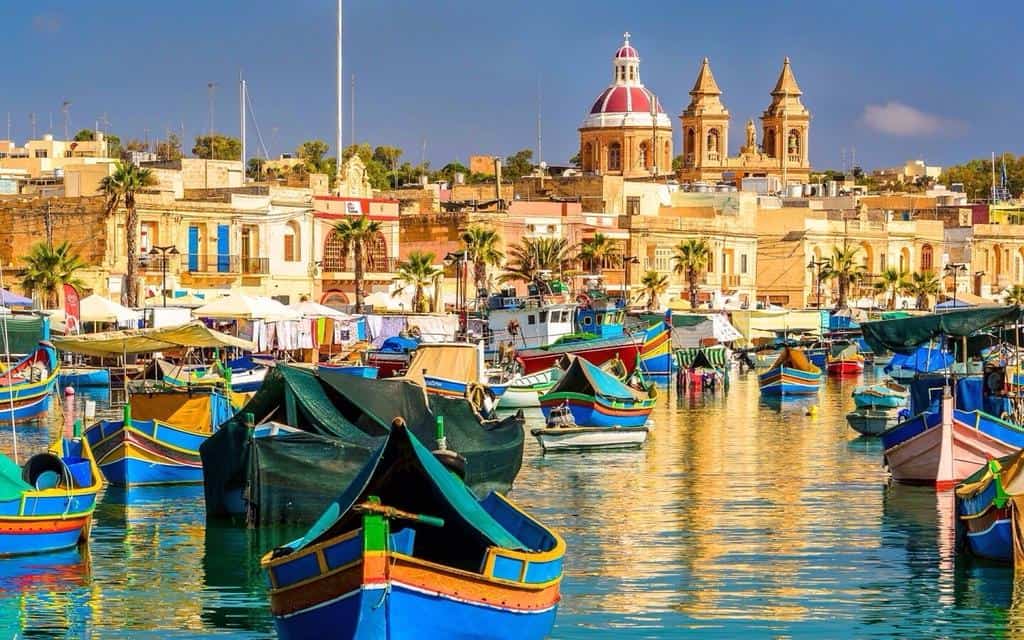
Marsaxlokk is a cute little village with a true Maltese character. It is officially (but also informally) known as the fishing village of Malta. This is the place where the smell of fish and sea will venture into your senses and consume you. A lovely, peaceful town which is made up of no more than one major main road which splits the beautiful sea, with an interesting, highly colourful waterfront.
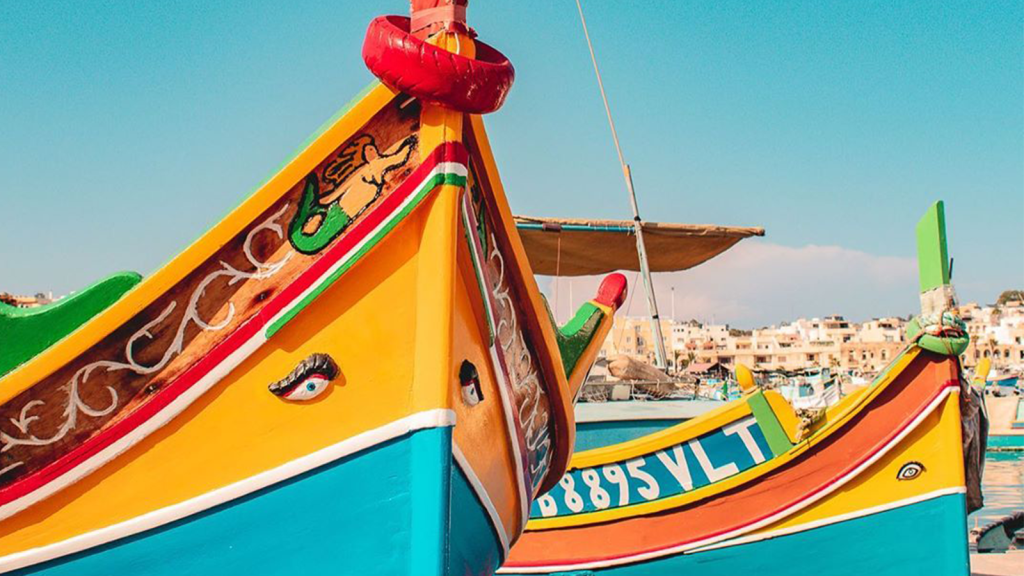
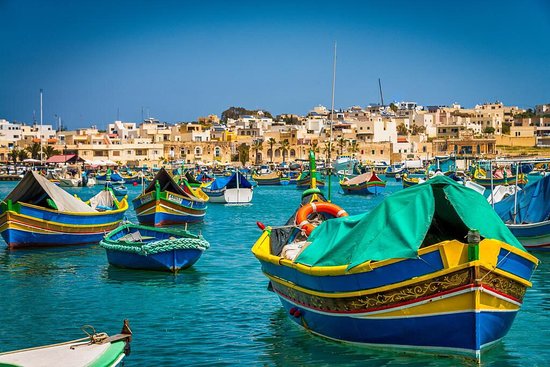
In the bow of almost all the fishing boats in Malta’s fishing village Marsaxlokk sit the eyes. The eyes of Osiris that literally keep a watchful eye over the fishermen, making sure they return safely to port with the day’s catch. It is no wonder that the colorful and unique little luzzo boats have become somewhat of a symbol of Malta. These stable and robust boats have been used in Malta for thousands of years, through the Mediterranean winter storms and under the merciless summer sun. Today, most luzzo boats have been replaced with more efficient fishing vessels around Malta, but here in Marsaxlokk, the luzzo boats have had to continue to simmer out to sea. Every day, all year round. So also this February day when we visited the village.
Where is Marsaxlokk located?
Easily answered by saying ‘the extreme southern tip of Malta’. In fact, the fish-like shape of the main island of the Maltese archipelago is split between two small towns, both equally beautiful in their own way; Birzebbugia and the fishing village of Marsaxlokk. But don’t worry nowhere in the Maltese islands is very far away. Marsaxlokk borders Birzebbugia, which hosts the Malta Freeport, and the area known as tal-Barrani in Zejtun. The road which crosses these two points make up tiny Marsaxlokk.
History of Marsaxlokk
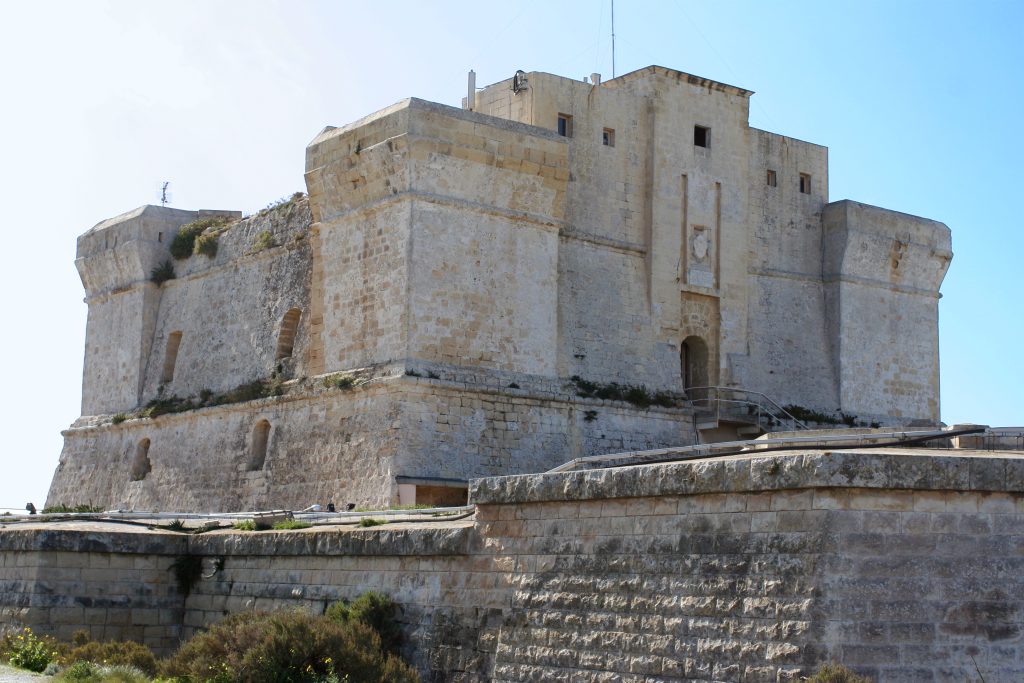
Marsaxlokk, sometimes written in short as M’Xlokk, has a lot of history to offer, despite it not being a place renowned for story. But this zone in Malta, like any other area which is close to the sea, has a history which dates back to the knights. This is why it is not surprising that Marsaxlokk is home to an old tower. The name of the tower is Fort San Lucjan (or Lucian), and it was built by the Order of St John in 1610. This is the second-largest watchtower in Malta and is definitely worth a visit. Nowadays the tower serves as an Aquatic Research Centre Facility.
According to history books, Marsaxlokk was the first place where the Phoenicians landed in Malta in the 9th century B.C. The area known as Tas-Silg is also an interesting historical spot as discoveries made showed that it was a site for worship in the Bronze Era.
Over the years, the place became a hub for fishermen and it is still like this till this very day.
What to do?
Marsaxlokk is a small village with a lot to offer with great things to do and things to see.
- Visit the Parish church which is dedicated to the Madonna of Pompeii. This was built in 1897 and is situated in the main square. It has a beautiful interior with magnificent paintings by Maltese artist Giuseppe Cali.
- If you are holidaying in Malta in the first week of July, you should make it point not to miss the local village feast.
- Take a stroll along the Harbour. Observe local fishermen and watch out for the colourful ‘luzzu’ (the traditional Maltese boat).
- Go shop from the local open market which takes place every day. You can find souvenir stalls and other local products like honey and jam. On Sunday the market gets bigger and fishermen come to show off their catch.
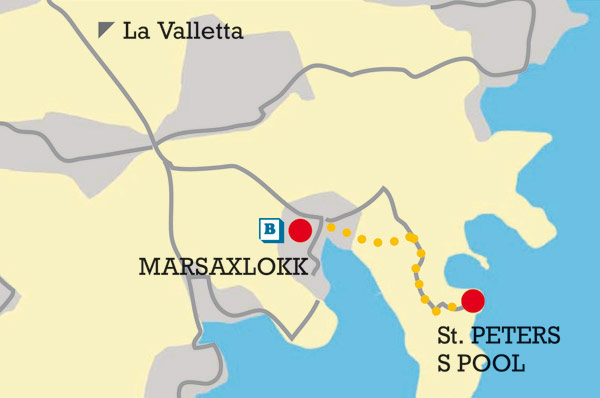
- Go swimming! There are amazing swimming spots in the area. Check out St Peter’s Pool or Kalanka Bay. They are not easily accessible, but from the town centre, they are easily reached by motorbike or even a nice walk.
- Visit a Fort. Marsaxlokk boasts interesting places like Fort St Lucian, Fort Tas-Silg and Fort Delimara.
- Hike through the village periphery. There’s a good track between Marsascala and Marsaxlokk. An ideal activity for winter.